Heroic Historicals: Robert E. Howard, Harold Lamb, Poul Anderson and James Clavell
I define Heroic Fantasy (HF) as a type of fiction in which a heroic (bigger than life) figure uses a combination of physical strength and edged weapons (swords, axes, spears) to face bigger than life foes. The hero may be either male or female, but the focus is primarily on personal conflict between the hero and various villains.
I divide Heroic Fantasy into four categories: Sword and Sorcery, Sword and Planet, High Fantasy, and Heroic Historical. I’ve already discussed/defined S&S and S&P earlier here at Black Gate, so today I’m looking at Heroic Historical.
[Click the images for heroic versions.]
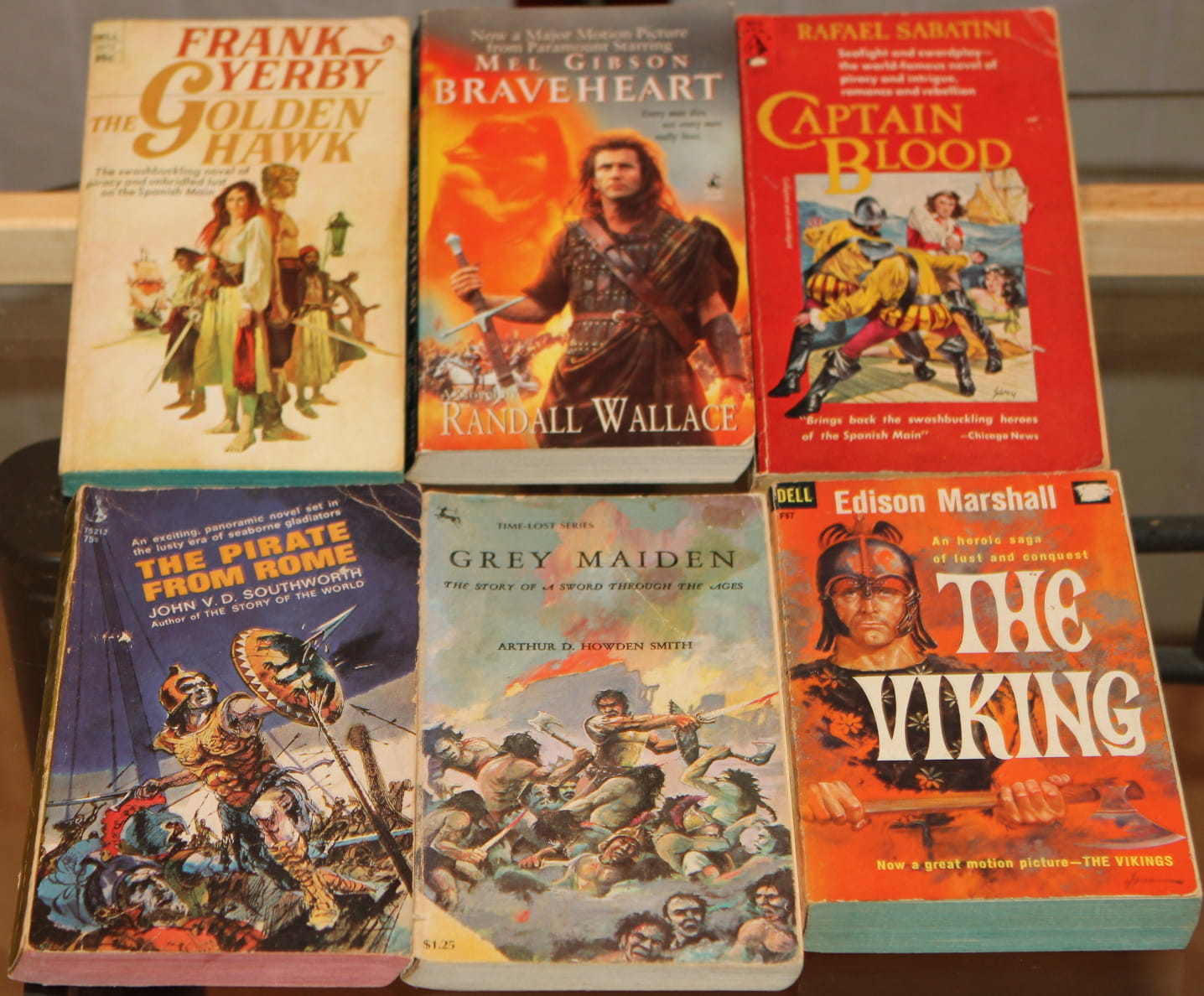
The Heroic Historical story is about a somewhat larger than life hero who exists within a recognizable period of history, such as the Greek, Roman, or Viking period. The main character may be a fictionalized but known historical figure, or completely fictional.
The historical period is generally drawn with some accuracy, although not often to the exacting standards of scholarly history. You usually won’t see anachronisms and will not generally be asked to accept the common existence of phenomena that violate the known history and physical laws of Earth. This means you won’t regularly see flying dragons, flying galleons, flying horses, or flying humans.
Supernatural forces sometimes play a small part in Heroic Historicals, but nothing like in S&S or High Fantasy. The setting is Earth during a recognizable historical period, so magic is not going to be a mainstay.
Heroic Historical is a very broad field that often crosses and blurs typical genre lines. That makes it much harder to determine the basic genre “rules,” as I’ve done with the other subtypes of HF. Make the setting conform generally to the Earth we know, depict the time period accurately, and feature heroes with swords and similar weapons. That’s about it.
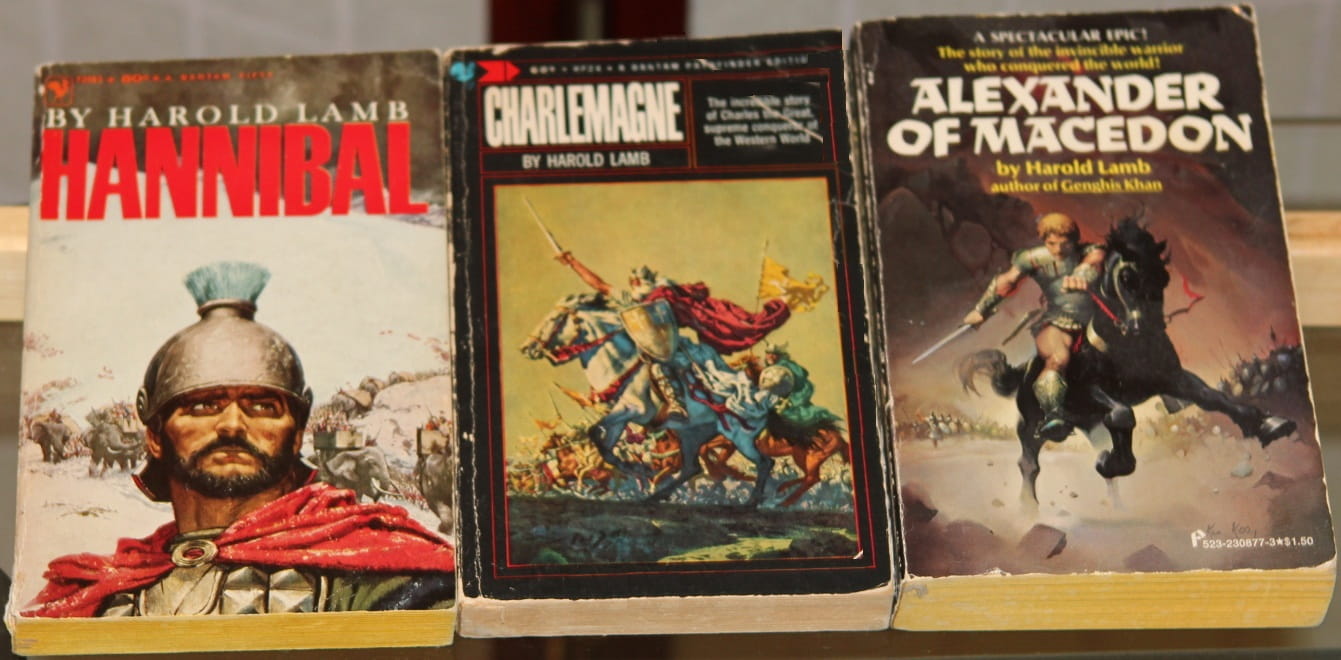
Last month I posted about John Maddox Roberts Falcon series. I classify these as heroic historicals. Harold Lamb (1892 – 1962) might be the most influential heroic historical writer of last century, and Robert E. Howard wrote this kind of fantasy on occasion.
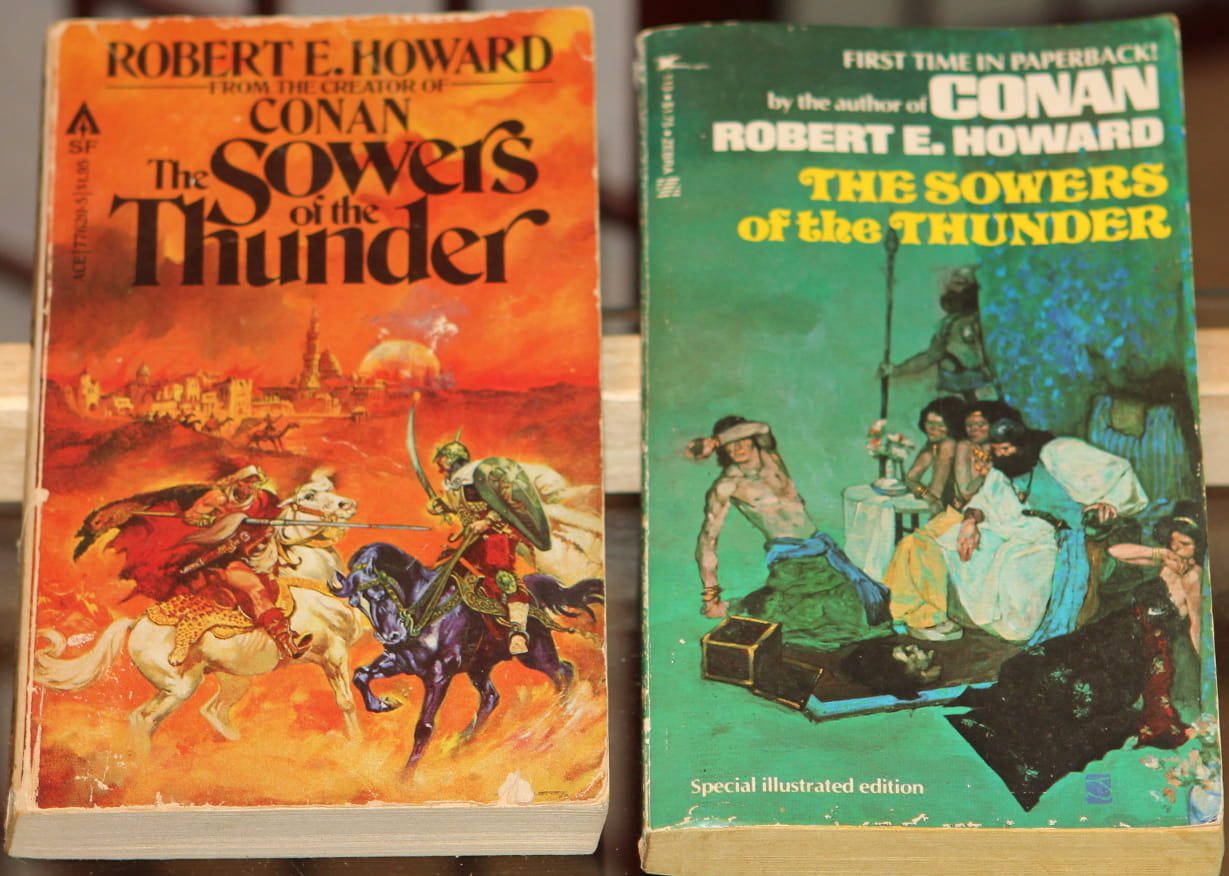
REH once said he preferred it to any other type of writing. His collection called The Sowers of the Thunder gives us four such stories, and is actually my favorite Howard work. Below are some more examples of the Heroic Historical.
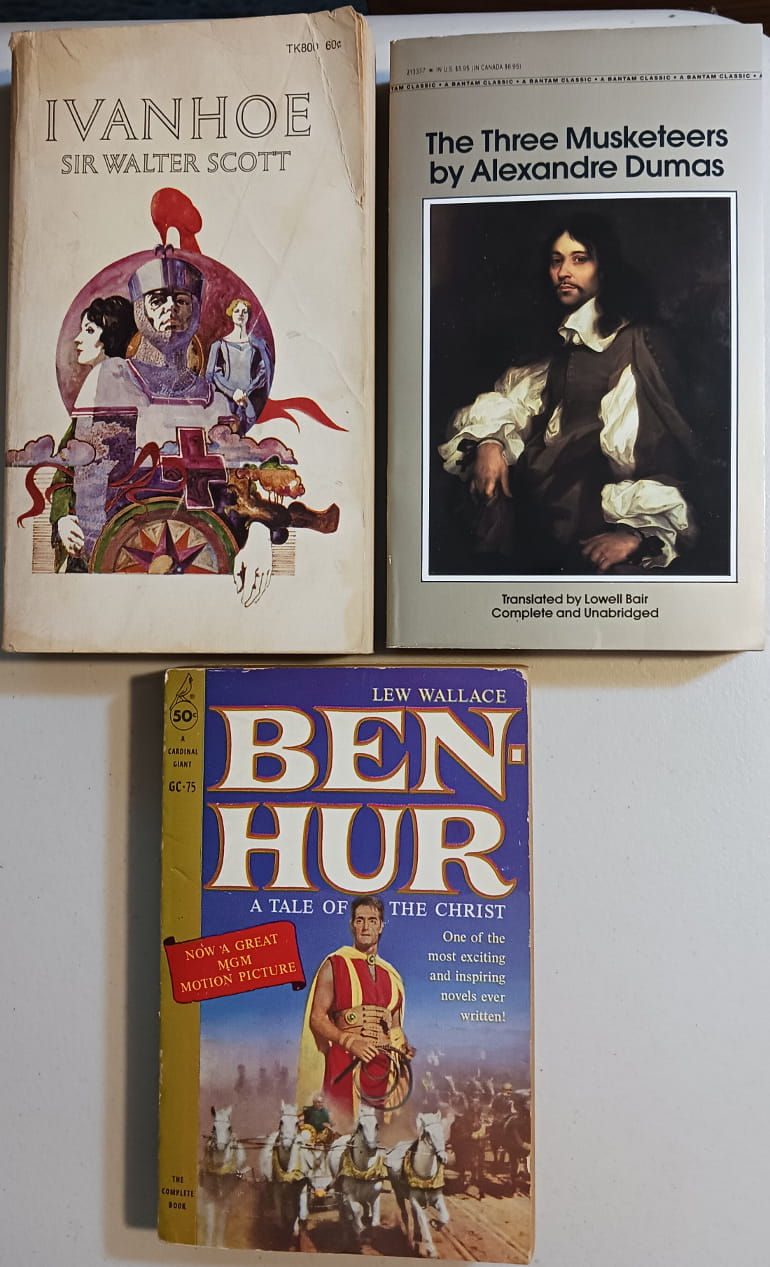
The Iliad and The Odyssey are probably best classified as Heroic Historicals, although they reflect the beliefs of their time and allow for more “fantastic” actions than are often acceptable in the modern genre. Ivanhoe (1819) is a much later example and closer to the modern form. Edgar Rice Burroughs wrote a few heroic historicals, most notably The Outlaw of Torn, which is “Ivanhoesque” to me.
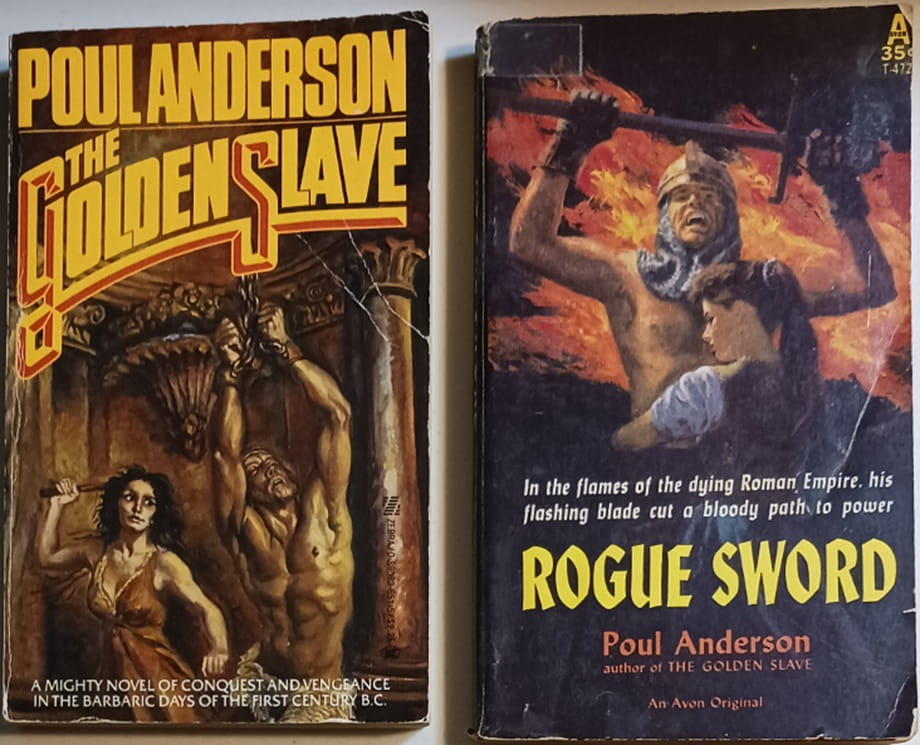
I mentioned REH above, and my next favorite writer in this genre is Poul Anderson. He set several books in Viking times and featuring actual historical figures, including Hrolf Kraki’s Saga and the Last Viking series about Harald Hardrede. I’ll talk about Anderson’s work here later so I’m not including pics of the Viking books here yet. Here’s a couple of his lesser known works that fall into heroic historical. Both are good reads.
Ken Bulmer, who I’ve mentioned many times before, wrote adventure-focused Heroic Historicals under the names Neil Langholm and Andrew Quiller and I’ll talk about those down the line. One of the most popular modern writers of this type is Bernard Cornwell (1944). See his Last Kingdom series.
 |
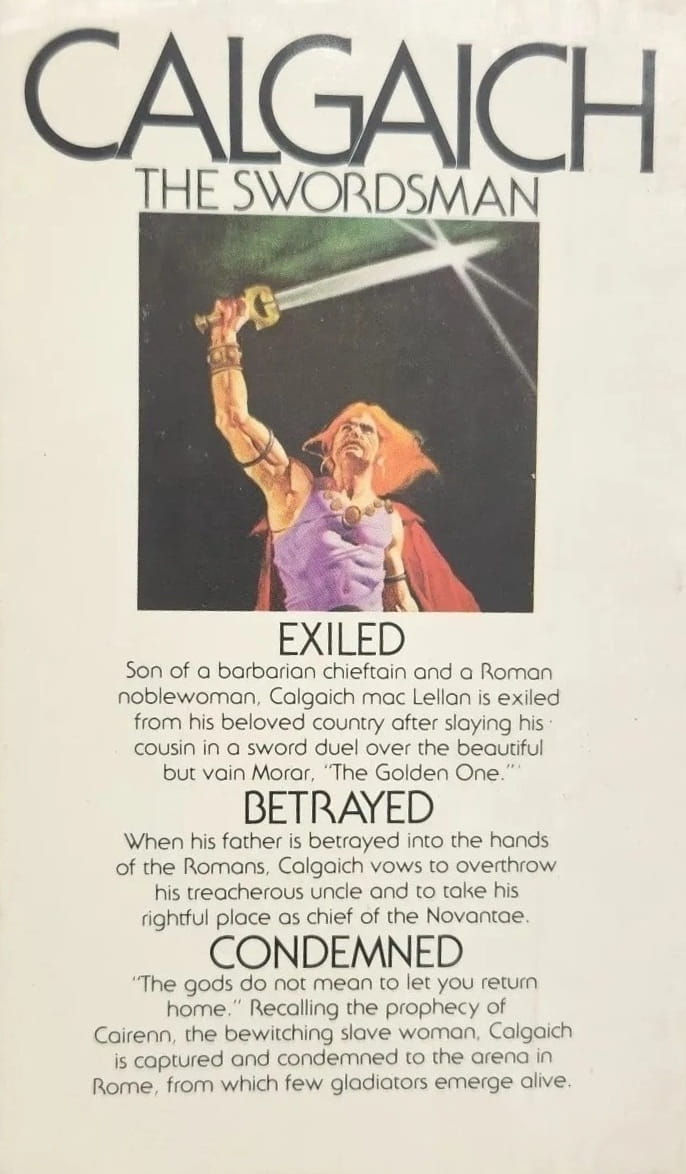 |
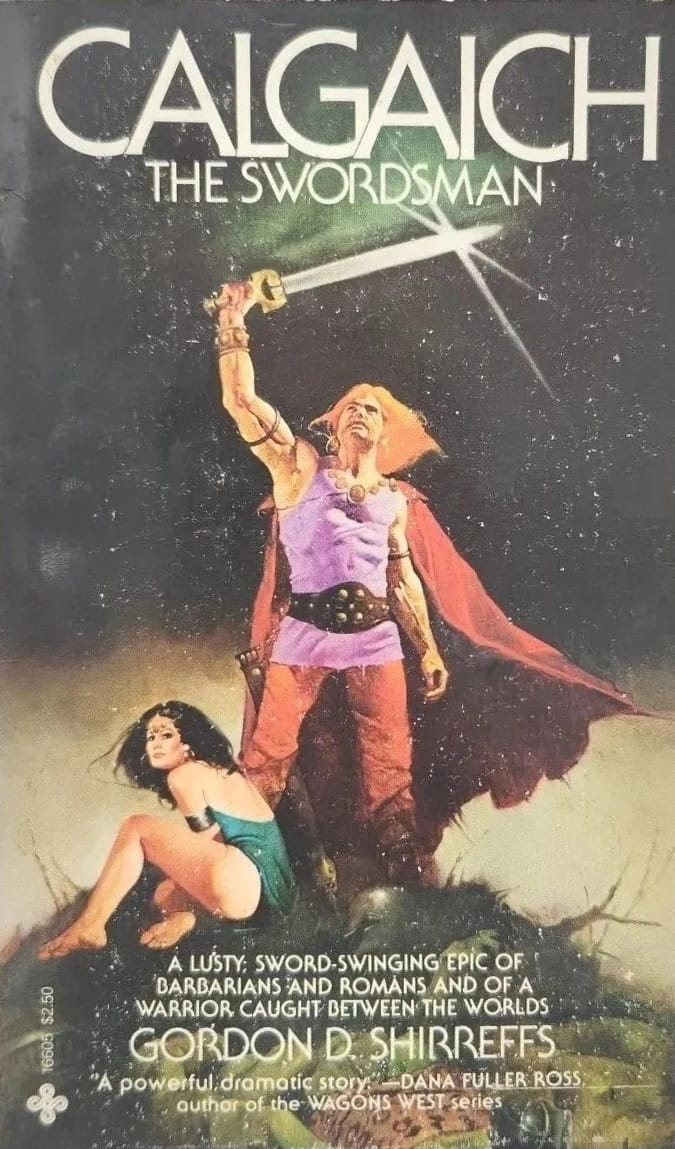
Calgaich by Gordon D. Shirreffs (Playboy Press Paperbacks, March 1980). Cover by Enrich
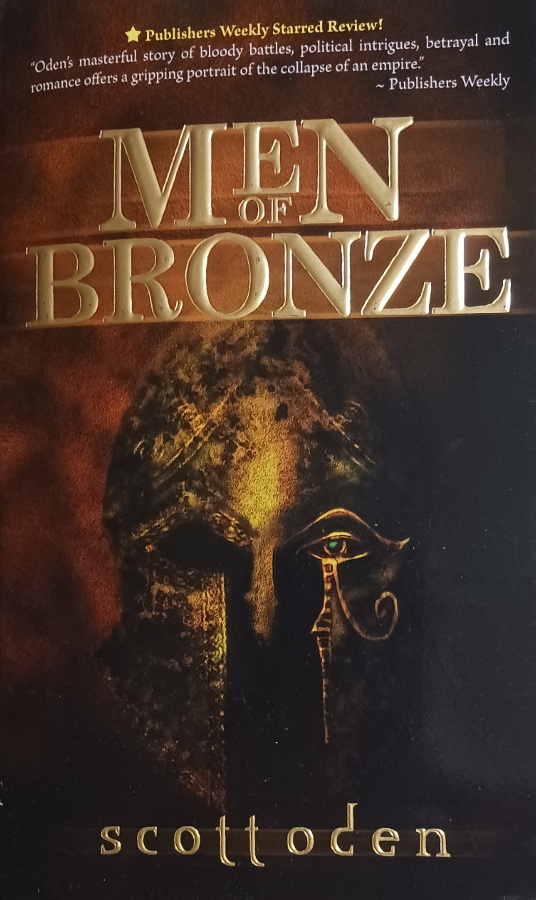
Author Scott Oden began his career with Heroic Historicals in his fine novel Men of Bronze, set in the time of Pharaohs (Cover by Adam Mock). And I read a truly fine one just recently by Gordon D. Shirreffs called Calgaich (cover by Enrich).
Many well loved classics fit under the Heroic Historical umbrella. The Three Musketeers (1844). Captain Blood (1922). Ben Hur (1880), etc.
 |
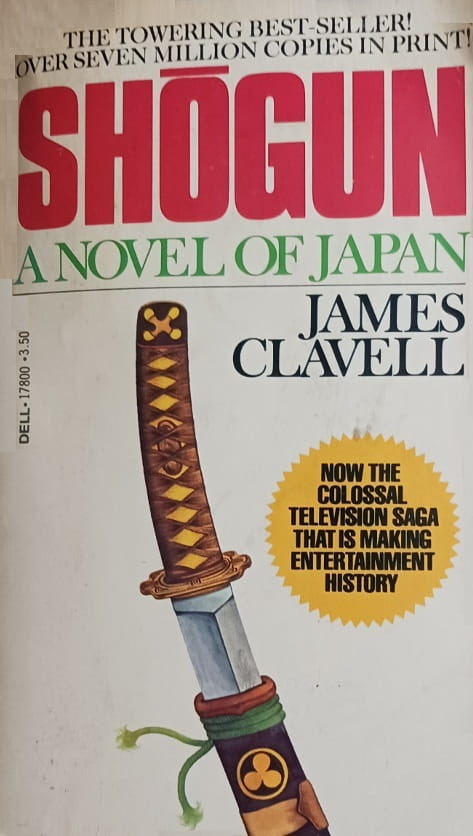 |
Men of Bronze by Scott Oden (Medallion Press, July 1, 2006) and Shogun
by James Clavell (Dell, January 1977). Cover artists unknown
There are also Heroic Historicals written about cultures other than the European one, such as Shogun (1975, Ed Vebell cover), though I’ve not read as many of those and should do so.
What are some of your favorite heroic historicals?
Charles Gramlich administers The Swords & Planet League group on Facebook, where this post first appeared. His last article for us was an obituary for Becoming a Book Collector in Skyrim. See all of his recent posts for Black Gate here.
Would Talbot Mundy’s Tros of Samothrace fit? I don’t THINK I remember any overtly fantastical elements, but it’s been a long, long time since last I read it.
Also, Mundy’s Caesar Dies!
And a number of Rider Haggard novels, most notably Eric Brighteyes.
Joe, I think Tros would fit well here. At the time I wrote this piece I was intending to do a follow up piece on the Tros books but I haven’t gotten around to it yet. But I think they fit.
Given the variety you list here, I’d say that Dudley Pope’s Ramage series would count, as well as Jean M. Auel’s Earth’s Children series (though that would technically be Heroic Prehistorical). Does the hero have to be human? If not, then Elyne Mitchell’s Silver Brumby series would be part of this, too. All of those are perennial favorites of mine.
Can the category include works written to fit a specific contemporary period that has now slid into the presents past? Or would that violate the weaponry rules for the whole category? I’m thinking of a number of Tom Clancy’s books.
There’s certainly a lot of stuff that skirts the edge here. Like the castaways in time series by Robert Adams, which brings in more modern weapons. I personally feel that if there are modern weapons then we’re dealing with something else that I haven’t completely defined for myself yet. The Clan of the Cave bear and the whole genre that followed after is a little something else too, partly because we know so little about those times. Nothing was written down or has left ruins. I don’t know the Silver Brumby series. I’m going to have to check that out.
Fair enough. Perhaps current weapons will fall into a newer phase of heroic historical in the future. (I’d hesitate, given this, but would Baroness D’Orczy’s Scarlet Pimpernel fit, since you include Dumas’ Musketeers? There’s a lot of pistolwork in them.)
“Silver Brumby” is horse adventure fiction set in frontier Australia. The sole fantastical element is that the horses themselves are translated as talking to each other (though they can’t communicate with or usually understand humans) and demonstrating human-equivalent intellect. The story focuses around the stallion Thowra, a cream-and-silver brumby horse born in a thunderstorm, and his boon companion/blood-brother Storm. They grow up in a world of herds and battle, menaced by humans, learning survival, and eventually build co-existent herd kingdoms. When the humans do show up (rarely), it’s clear that the era is a setting before the author was writing, and it’s very accurately depicted. The flora and fauna are also correct, as are the methods the horses use in survival. Thowra himself is larger than life, and fights one-on-one battles against other stallions with muscle, hoof, and tooth. So, if the hero in heroic historical fiction can be other than human, I’d think that he counts.
It’s been a long time since I read Pimpernel but I think it would probably fit, much like the 3 musketeers. Silver Brumby sounds awesome. I’m going to have a look at Amazon today to see if I can find some. Reminds me of some of the Dog books by Kjelgaarde that I read as a kid. Desert dog for example.
I’ve never read Jim Kjelgaard’s Dog books, but the Kirkus review of “Desert Dog” sounds excellent! I’ll try to grab a couple of those, too. Thanks for the recommendation!
I loved Desert Dog. He also had one called Snow Dog that was great. He wrote a wonderful book about a polar bear called Kalak of the Ice. I just ordered book 1 of the Silver Brumby series. Looking forward to reading.
I never tried Ramage, but I did read every Alexander Kent (Douglas Reeman) Richard Bolitho books, even gave some of the official newsletters. Also Hornblower (of course).
Ramage has quite a bit of derring do in it, and worthwhile to at least try. ^_^
I’ve not really been able to get into Horatio Hornblower, but I’ll be trying Bolitho shortly. Thanks for the recommendation!
You could catalogue this genre for the rest of this year and still barely scratch the surface. Two votes from me are:
Rhinegold by Stephen Grundy
Demon of the Air by Simon Levack (it is book one of a 4 book series set in Tenochtitlian). Hmm hardly a larger than life character, quite the opposite but a fascinating read.
Don’t forget Virgil’s Aenid for the classics.
Honourable mention – I haven’t read it yet so could be awfully dodgy – The Golden Voyager by Simon Finch.
Definitely Aenid. I haven’t read the others so I’m sure there are a lot more to fit here. This used to be a bigger genre than it is now, I think. Lots and lots of stuff from the 1950s, to 80s.
It’s been forty years since I read it, but I thought Edgar Rice Burroughs’ I Am a Barbarian, set in the Rome of Caligula, was a terrific book.
I need to read that!
One of my favorites by ERB
And Gardner Fox wrote those kinds of historical potboilers by the caselot, although I admit I haven’t read any of them myself. But I assume they’re perfectly cromulent.
Yes, I’ve got a bunch of them. I’ll do an article on Fox’s historicals at some point.
Is Arthurian Legend Heroic Historical or would it be too mythical?
Bernard Cornwall’s The Warlord trilogy is an awesome telling of King Arthur, kinda hard to say how historically accurate it would be but the magic is in that sweet spot that I love, dark and never quite sure if its really magic or just an elaborate hoax that feeds of superstition.
The Arthurian stuff is a head scratcher. Much of what is written definitely “feels” like heroic historical but then there are the mythological elements and the sorcery. All I can say is that I generally shelf Arthurian stuff with my more historical materials, unless it is written by someone who has written primarily fantasy. David Gemmell for example. He’s written an arthurian series but I already knew him from pure fantasy.